By Igene Stephen
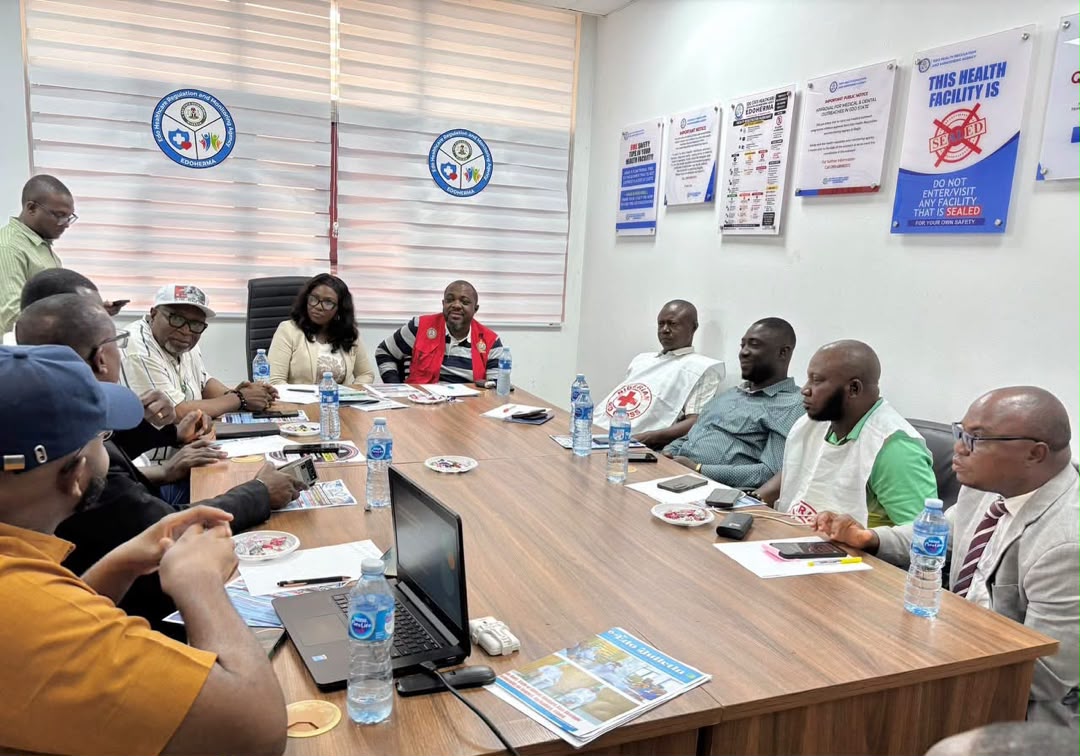
The Edo State Healthcare Regulation and Monitoring Agency (EDOHERMA) in collaboration with the Edo State Emergency Management Agency (EDOSEMA), has convened a strategic inter-agency roundtable engagement on strengthening disaster preparedness, emergency response, incident command systems and medical referral coordination across the State.
The engagement brought together key stakeholders from EDOSEMA, the Edo State Fire Service, the Edo State Emergency Medical Services (EdoEMS), the Ministry of Health, the Nigerian Red Cross Society, the Edo State Traffic Management Agency (EDSTMA), among other emergency response and healthcare stakeholders.
During the engagement, the Chief Executive Officer (CEO) of EDOHERMA, Dr. Adesuwa Urhoghide-Edigin, emphasised that effective emergency preparedness begins long before a disaster occurs. She highlighted the need for safer health facilities, proper emergency planning for mass gatherings, strategic ambulance positioning, functional referral systems and clearly defined responsibilities among responding agencies.
The CEO disclosed that EDOHERMA had developed a Disaster Preparedness and Emergency Response Manual for healthcare facilities in Edo State, which outlined preparedness measures, emergency response procedures, evacuation arrangements, incident command structures and coordination between health facilities and relevant emergency response agencies. She explained that the document would be shared with stakeholders for their review, contributions and recommendations to ensure a comprehensive and practical framework.
Dr. Urhoghide-Edigin advocated the need to develop appropriate policies to address identified gaps in emergency preparedness, mass gathering safety, ambulance operations and inter-agency coordination. She explained that the ongoing dialogues would help identify areas requiring policy intervention, after which all relevant ministries, department and agencies would be formally engaged to facilitate the development of the necessary policies to ensure that agreed measures received appropriate institutional and government backing.
The Executive Secretary of EDOSEMA, Hon. Jerry Idahosa, emphasised that disaster management is a collective responsibility requiring the active involvement of government agencies, emergency responders, communities and other relevant stakeholders. He noted that no single agency could effectively manage disasters alone, stressing that strong inter-agency collaboration, clearly defined responsibilities and timely information sharing were essential to saving lives and protecting property.
Hon. Idahosa explained that disaster risk reduction begins with identifying, assessing and mapping potential hazards before they become emergencies. He recommended collaboration in conducting public awareness campaigns, early-warning interventions and disaster preparedness activities across local government areas, and urged agencies to prioritise disaster prevention, mitigation and preparedness rather than waiting until emergencies occur. He reaffirmed EDOSEMA's commitment to sustained collaboration towards building a safer and more resilient Edo State.
The Director of the Edo State Fire Service, Engr. Osayande Owens, commended EDOHERMA and EDOSEMA for initiating what he described as a much-needed intervention on addressing gaps in emergency preparedness to strengthen collaboration among response agencies. He explained that the Fire Service operates through two important approaches: proactive prevention and reactive emergency response, noting that greater emphasis must be placed on preventing disasters before they occur.
Engr. Owens highlighted the Service's responsibility for fire prevention, emergency response, rescue operations and public safety awareness. He assured stakeholders that the Fire Service remained committed to responding promptly to emergencies.